
When preparing for UAE Corporate Tax, one of the practical questions businesses face is how their everyday expenses will be treated for tax purposes.
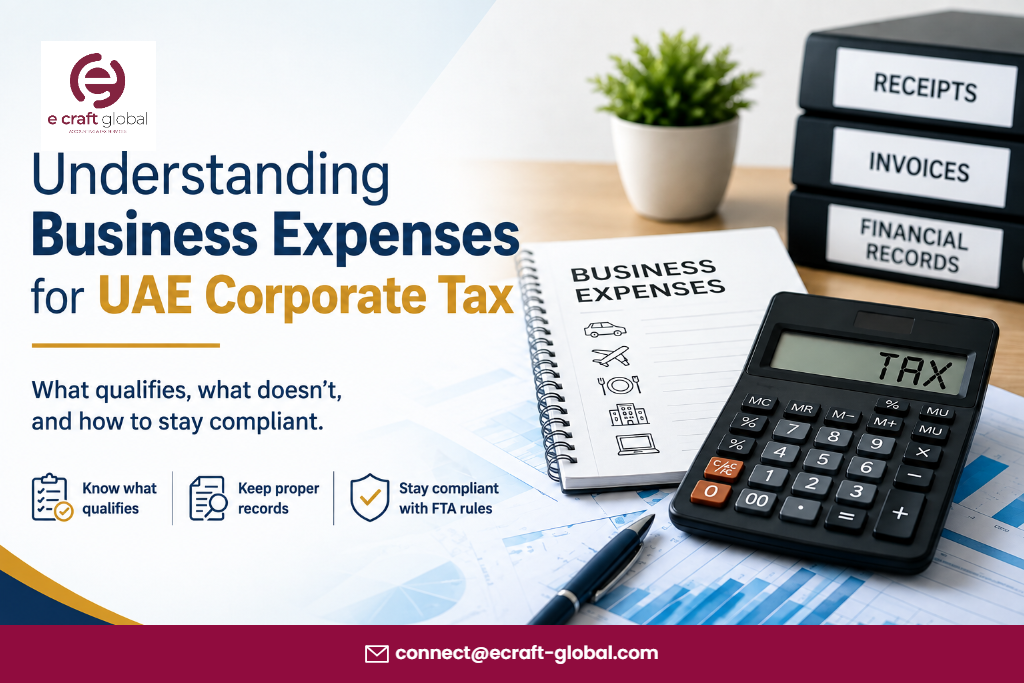
The general rule is that expenditure incurred wholly and exclusively for the purposes of the business can generally be deducted when calculating Taxable Income. However, the accounting treatment of an expense does not always determine its tax treatment.
Business expenses and Corporate Tax
Most businesses incur a wide range of costs in their day-to-day operations, from employee costs and office expenses to professional fees, technology and other operating costs.
Where these expenses are incurred for the purposes of the business, they may generally be deductible. However, the Corporate Tax rules also contain specific provisions that can restrict or change the treatment of certain expenses.
This means that businesses should look beyond simply recording an expense in their accounts and consider its treatment for tax purposes.
When an expense needs closer attention
Some expenses may have both a business and personal element. Others may fall into categories where the Corporate Tax rules provide specific limitations.
There may also be a difference between an expense recognised in the financial statements and the amount that can ultimately be deducted when calculating Taxable Income.
As a result, the Corporate Tax calculation may require adjustments to the accounting profit before the final taxable income is determined.
Why supporting documents matter
Keeping proper documentation is an important part of this process.
Invoices, contracts, payment records and other supporting documents help establish the nature of an expense and its connection with the business. They also provide a basis for reviewing the treatment of expenses when preparing the Corporate Tax return.
This does not mean that every business expense needs a complicated tax analysis. However, significant or unusual expenses should be reviewed where their treatment may not be straightforward.
Accounting records are the starting point
A business’s financial statements provide the starting point for calculating Corporate Tax, but they are not necessarily the final tax computation.
The accounts need to accurately reflect the business’s transactions, while the Corporate Tax calculation needs to take into account the specific tax rules applicable to those transactions.
Maintaining accurate bookkeeping throughout the year can make this process considerably easier, as the information and supporting documents are already available when the Corporate Tax return is prepared.
A practical approach
For most businesses, the approach is relatively straightforward: maintain accurate accounts, keep appropriate supporting documentation and identify expenses that may require specific tax treatment.
Where there is uncertainty about a particular expense, reviewing it before finalising the Corporate Tax calculation can help ensure that the correct treatment is applied.
E Craft Global provides Corporate Tax, accounting and tax advisory support to businesses in the UAE, including assistance with Corporate Tax calculations, compliance and related accounting requirements.